What Makes Panelled Joggers Different? Structure is not decoration. It is the quiet architecture of the garment.
Most joggers are designed as if comfort alone is enough.
A waistband. Two legs. A cuff at the ankle. The familiar outline repeated until the garment becomes almost invisible.
Panelled joggers begin from a different position.
They ask whether comfort can also carry structure. Whether movement can be considered without surrendering form. Whether a garment associated with ease can possess enough discipline to hold its shape, frame the body and communicate intention before the wearer says a word.
The difference is not simply that extra seams have been added.
The difference is what those seams are there to achieve.
A Seam Is Never Just a Line
Every garment begins as separate pieces of fabric.
Construction determines how those pieces meet, how they respond to movement and how the finished silhouette behaves on the body.
In ordinary joggers, the pattern is often kept deliberately simple. Fewer components can reduce production time and create a familiar, uncomplicated shape.
Panelled construction introduces more decisions.
Where should the line begin?
Where should it travel?
Should it follow the natural movement of the leg, interrupt it or visually reshape it?
A panel placed without purpose becomes decoration. A panel placed with understanding becomes part of the garment’s architecture.
It can create direction.
It can introduce balance.
It can give the leg a cleaner visual line.
It can turn an otherwise basic silhouette into something recognisable.
Construction Changes Perception
Two pairs of joggers can be made from similar fabric and still appear completely different.
One may collapse around the knee, gather heavily at the ankle and lose its shape as the wearer moves.
The other may hold a clearer line from thigh to cuff.
That difference is not always caused by fabric weight alone.
Pattern cutting matters.
Rise matters.
Thigh allowance matters.
The position of the knee matters.
The taper matters.
Panel placement can influence how all of these elements are perceived.
A well-positioned seam can lengthen the visual line of the leg. It can create separation between areas of the garment. It can add definition without relying on bright colour, oversized branding or unnecessary graphics.
This is one of the reasons structure is often felt before it is consciously understood.
The viewer may not immediately identify the construction.
They simply recognise that the garment sits differently.
Comfort Without Collapse
Comfort is frequently misunderstood as looseness.
But excess space does not always create a better fit.
A garment can be wide and still restrict movement in the wrong places. It can feel relaxed at the waist while pulling through the thigh. It can provide room at the seat but become uncomfortable when sitting, bending or walking.
True comfort depends on proportion.
Panelled joggers should allow movement through the areas that need it while maintaining control through the areas that define the silhouette.
That usually means considering:
- the depth of the rise;
- room through the seat and thigh;
- the position of the crotch;
- knee articulation;
- the rate of taper;
- the width and tension of the cuff.
These are not glamorous details.
They are the details that determine whether the garment becomes something a person repeatedly reaches for or something that remains in a wardrobe because it never quite feels right.
The Thigh Determines More Than Most People Realise
Many joggers are judged by how they look while standing still.
That is not enough.
The real test begins when the wearer sits down.
If the thigh has been cut too narrowly, the fabric is forced upward. Pressure develops through the groin. The waistband shifts. The back rise is pulled down. What looked acceptable in a photograph becomes uncomfortable in ordinary life.
A considered pair of joggers must account for the body in motion.
The thigh should have enough space to move without becoming shapeless.
The seat should remain covered when sitting.
The rise should support the body rather than fight against it.
The taper should begin gradually, not aggressively.
Panelled construction can assist this process when the pattern has been developed properly. It allows the designer to shape different areas of the leg with greater control rather than relying on one broad piece of fabric to solve every problem.
The objective is not tightness.
It is precision.
Why the Knee Matters
The knee is one of the most active points in any pair of trousers.
It bends repeatedly.
It pushes against the fabric when sitting.
It changes the distribution of tension throughout the leg.
When the pattern ignores the knee, the garment often creases heavily, pulls upward or loses its intended shape.
Strategic panelling can give the construction a clearer relationship with movement.
The seam may help define the knee area visually. The adjoining pieces may distribute tension differently. The leg can appear more dimensional because it has been built around form rather than treated as a flat tube.
This does not mean every visible panel automatically improves performance.
The pattern still has to be tested.
The seam still has to be comfortable.
The fabric still has to recover well.
But when these elements work together, the garment develops a sense of purpose that simple construction often lacks.
Taper Is a Matter of Restraint
A tapered jogger should narrow with intention.
Too little taper and the silhouette can feel unfinished.
Too much and the leg may cling through the calf, distort at the knee or gather excessively above the cuff.
The strongest taper is usually gradual.
It respects the width of the thigh, follows the movement of the leg and arrives at the ankle without creating a sudden visual break.
Panel lines can strengthen this effect. They guide the eye downward and can make the transition from thigh to cuff feel more controlled.
This is particularly important in heavyweight garments.
A substantial fabric does not disappear around the body. It occupies space.
If the pattern is poorly balanced, that weight becomes bulk.
If the pattern is considered, the same weight becomes structure.
The Cuff Finishes the Argument
The cuff is often treated as a minor component.
It is not.
It determines where the trouser ends, how the fabric stacks above the ankle and how the jogger relates to footwear.
A cuff that is too loose can make the entire leg appear unresolved.
A cuff that is too tight can become uncomfortable and force the fabric to gather excessively above it.
The correct balance should hold the ankle cleanly without creating unnecessary pressure.
This is where styling and construction meet.
The jogger should finish in a way that allows the footwear to remain visible while keeping the silhouette connected.
Nothing should feel accidental.
Panelling Should Never Become Noise
There is a temptation in design to assume that more detail means more value.
It does not.
Extra seams, panels and technical lines only strengthen a garment when they have been resolved carefully.
Otherwise, they become visual noise.
KROSSTOUCHE® does not approach panelling as an excuse to fill empty space.
The line must belong.
It should support the silhouette, reinforce the identity of the garment or contribute to the construction.
If it does none of those things, it should not be there.
Restraint is especially important in premium streetwear because the garment must remain wearable beyond the first impression.
A design may attract attention through complexity.
It earns longevity through balance.
The Role of Fabric
Panelled construction cannot be separated from fabric choice.
A lightweight fabric may move easily but fail to hold a strong line.
A heavier fabric may provide structure but demand more precise pattern cutting.
The fabric must suit the intended silhouette.
In substantial joggers, the material should have enough body to support the panel work without becoming rigid. It should fall cleanly, recover from movement and maintain comfort against the skin.
The seams must also be managed carefully.
Heavy fabrics create more bulk where panels meet. Poor construction can produce ridges, stiffness or discomfort. Proper seam allowance, stitching and finishing become essential.
Luxury is often found in these hidden decisions.
The customer may never see the inside of every seam.
They will still feel whether it was handled correctly.
Why Panelled Joggers Photograph Differently
Structured garments tend to hold light differently.
A flat leg presents one continuous surface.
Panelled construction introduces subtle changes in direction. Light meets each section at a slightly different angle. Shadows become more deliberate. The garment gains depth.
This is why panelled joggers can appear more dimensional in photography without relying on loud graphics.
The construction itself creates visual interest.
But the effect must remain secondary to wearability.
A garment designed only to photograph well has misunderstood its purpose.
The strongest products work in both conditions: under studio light and during ordinary life.
The Ascension Panelled Joggers
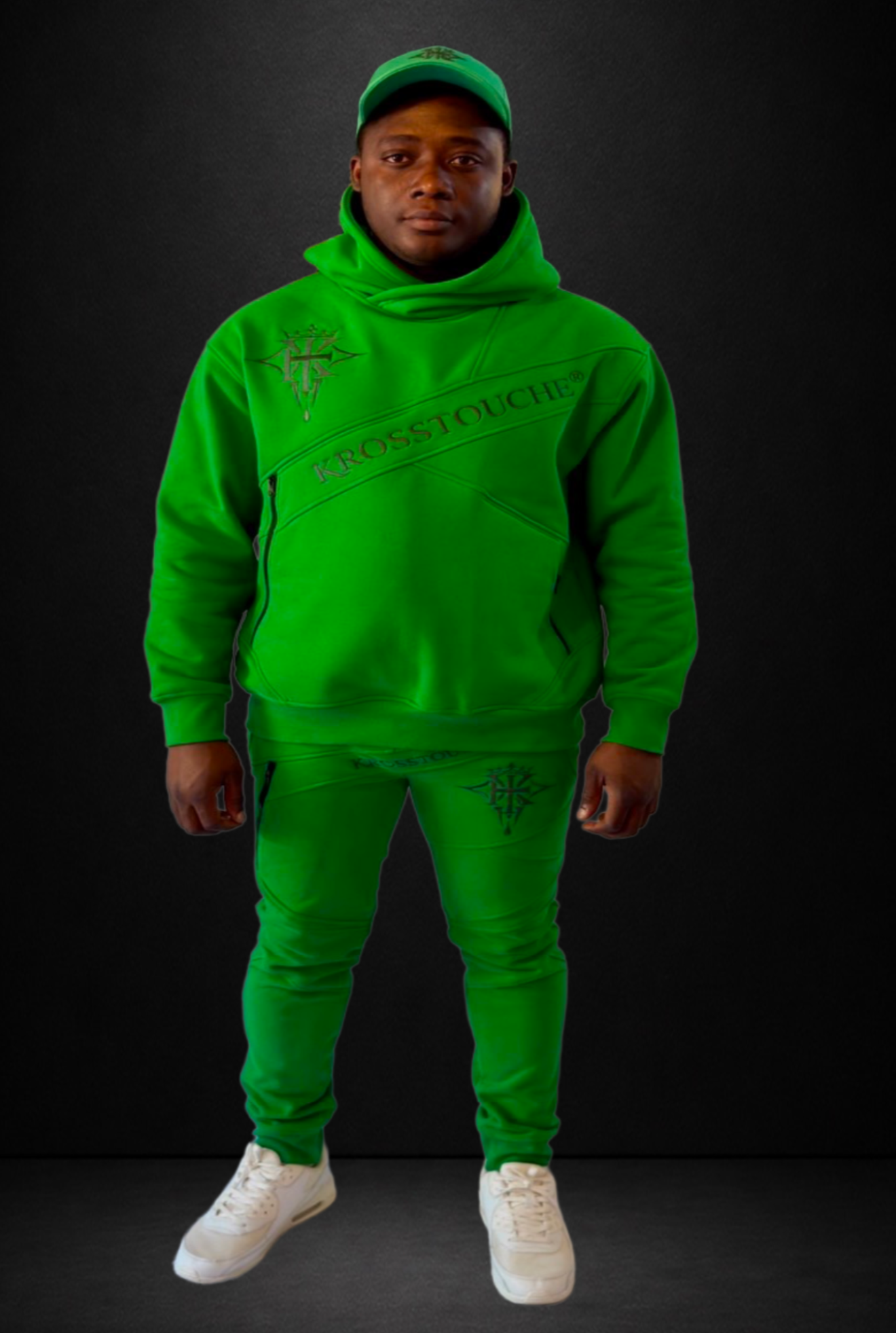
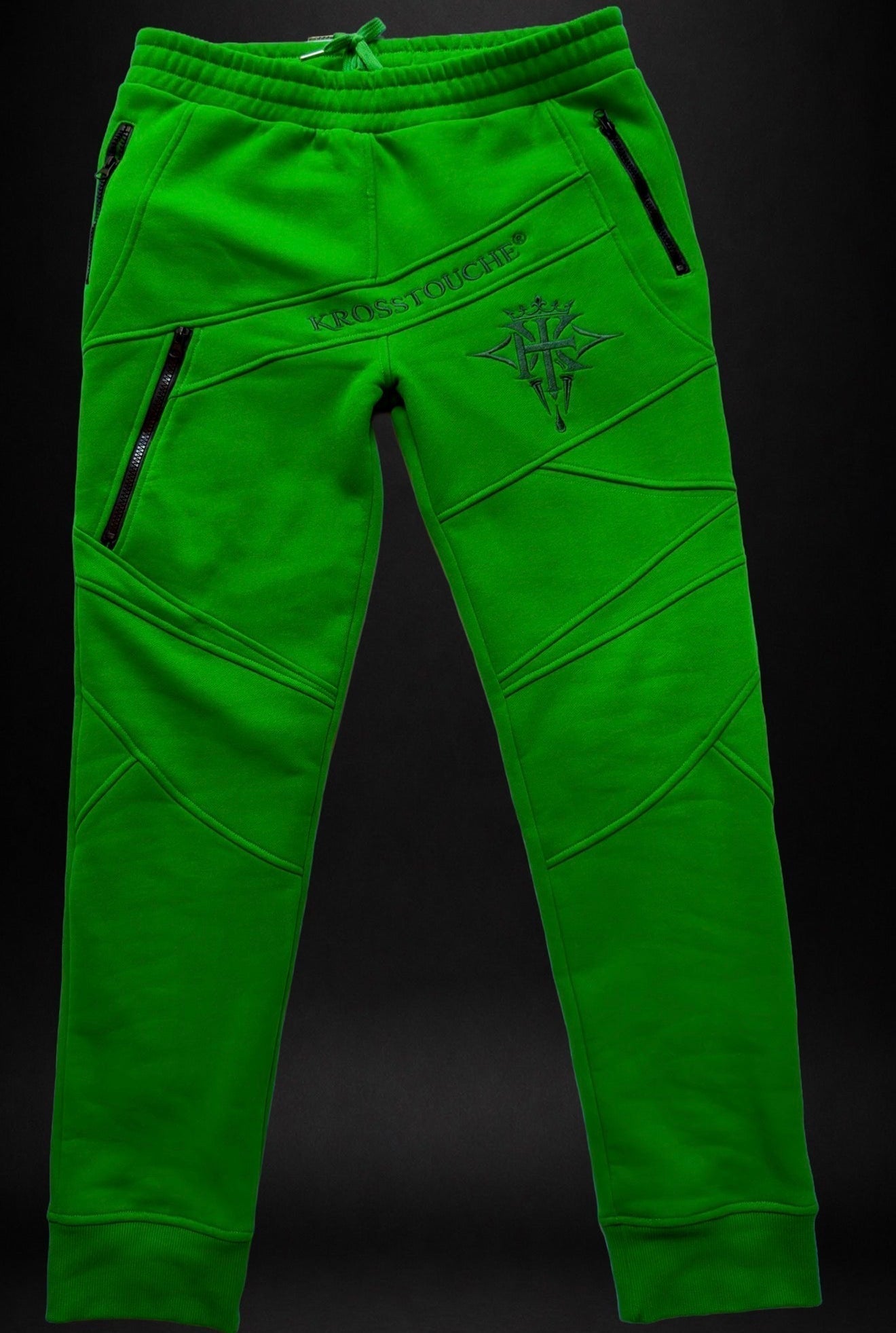
The KROSSTOUCHE® Ascension Panelled Joggers — Emerald were conceived as part of a complete silhouette rather than an isolated lower garment.
The emerald colour carries presence.
The panelled construction gives that presence direction.
The aim is not to overcomplicate the jogger, but to prevent it from becoming ordinary.
The lines are there to shape the garment.
The proportion is there to support movement.
The weight is there to create substance.
The restraint is there to keep all three in balance.
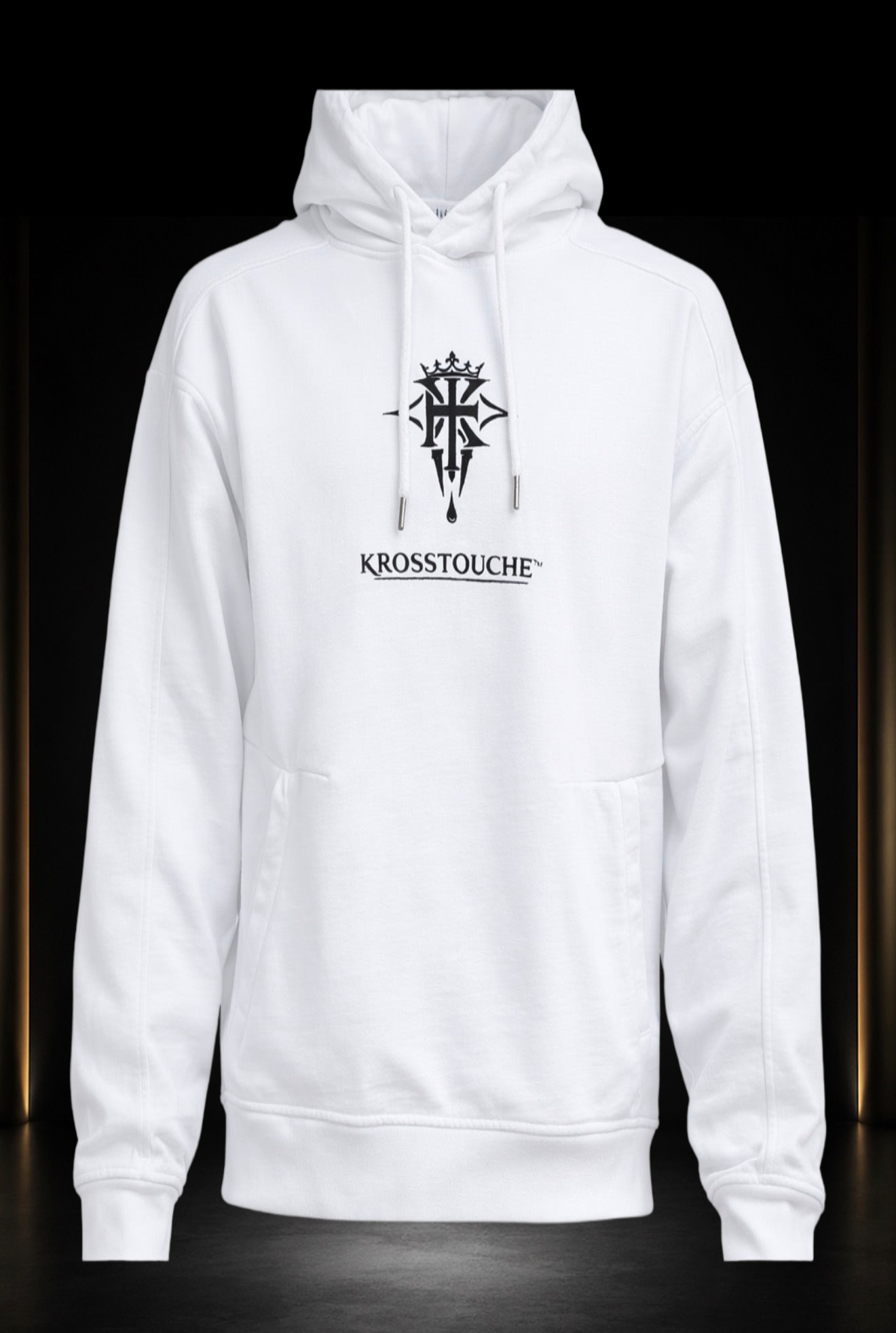
Paired with the Ascension Hoodie — Emerald, the joggers complete a tracksuit that feels unified rather than merely colour-matched.
That distinction matters.
A set should not look like two separate products placed beside one another.
It should feel like one idea expressed across the body.
Closing Reflection
The best construction rarely asks to be explained.
It proves itself through use.
Through the way a garment sits after hours of wear.
Through the way it moves when the wearer does.
Through the absence of pulling, slipping and unnecessary adjustment.
Through the quiet recognition that nothing feels misplaced.
Panelled joggers are different when the panels are more than decoration.
When every line has a reason.
When comfort has been designed rather than assumed.
When structure supports movement instead of restricting it.
That is when a familiar garment becomes something more considered.
Not louder.
Not busier.
Simply better resolved.

Written by AYODEJI ONADEKO